

Quicklinks
Top Results

Protecting your finances every step of the way
Anyone can become a target of fraud, but when you are aware of common red flags and remain vigilant, you're more likely to stay ahead of scammers. Our resources are designed to help you recognize the signs of fraud and provide you with tools to stop fraud before it affects you.

Fraud resources
Scammers are always looking for new ways to trick people into sharing personal information. Check out our blogs, how-to guides and security pages to learn how to avoid becoming a victim and how to protect your accounts.
Device instruction type
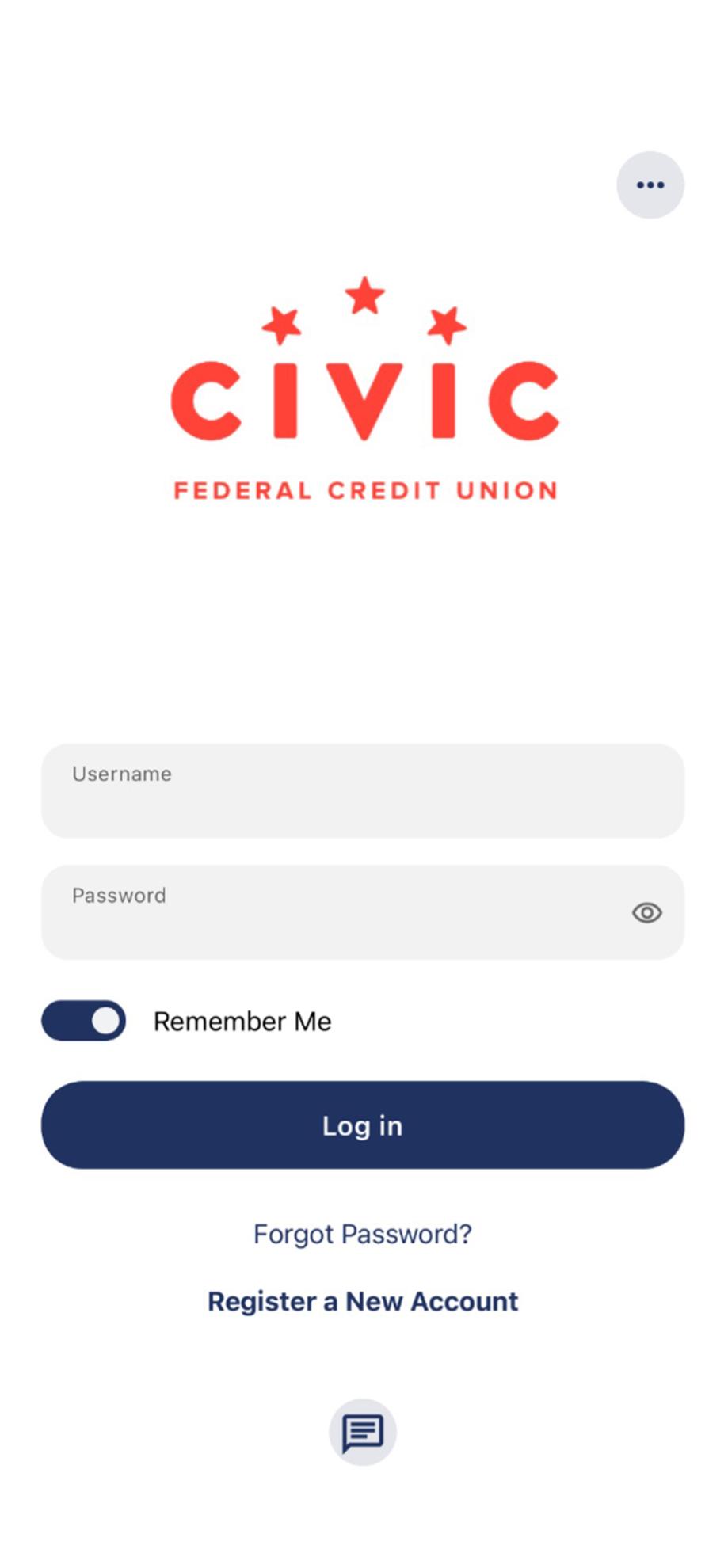
1. Log into the Civic app
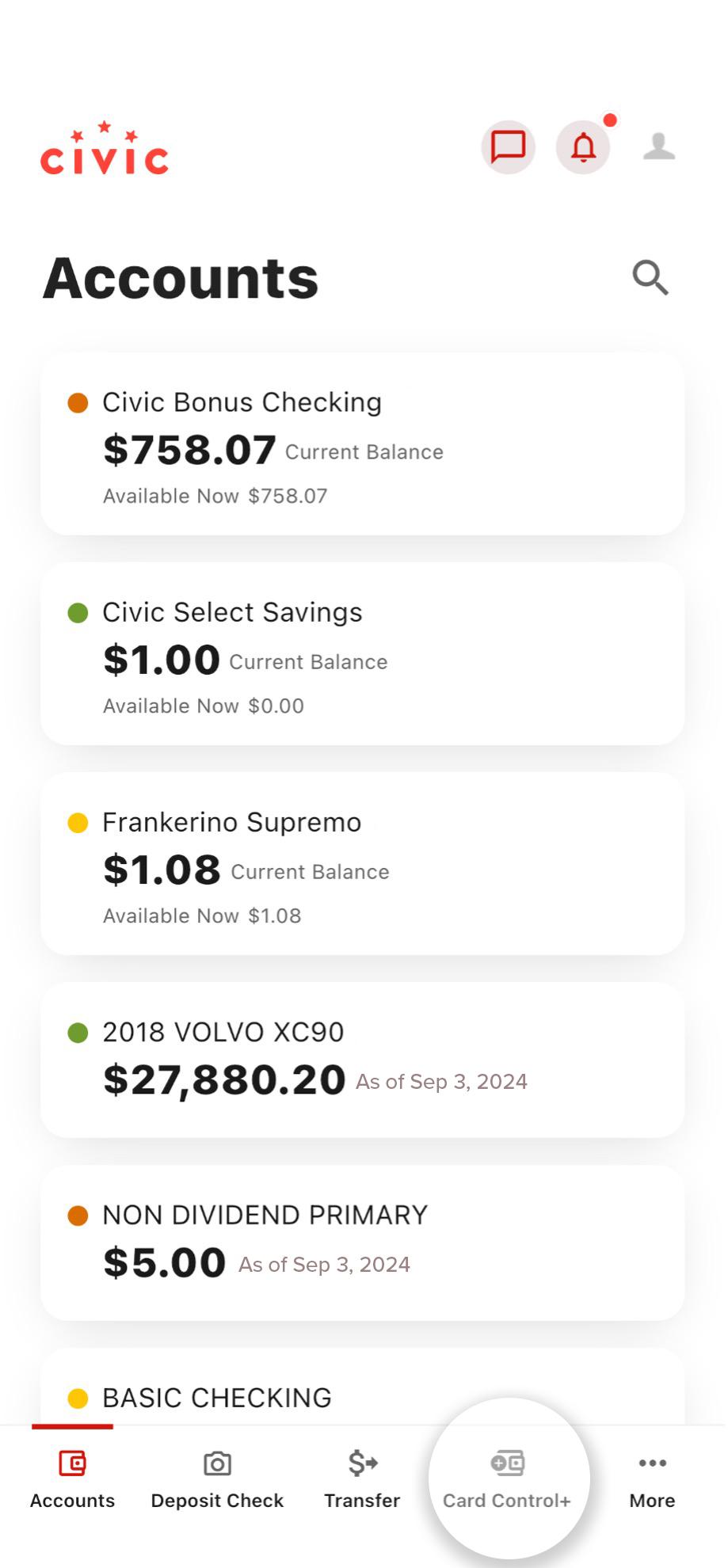
2. Select Card Control+
Card Control+ is located along the taskbar at the bottom of your screen.
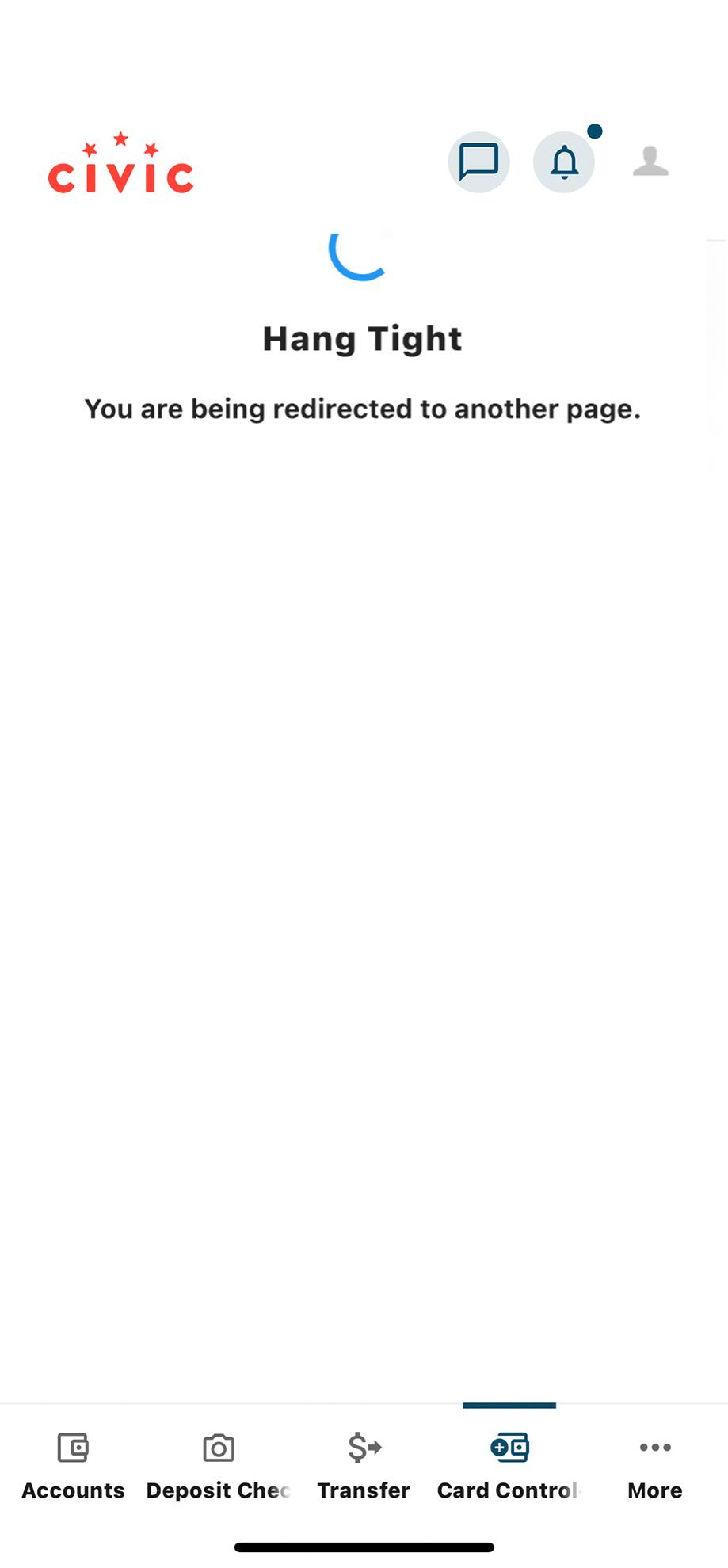
3. Hang tight!
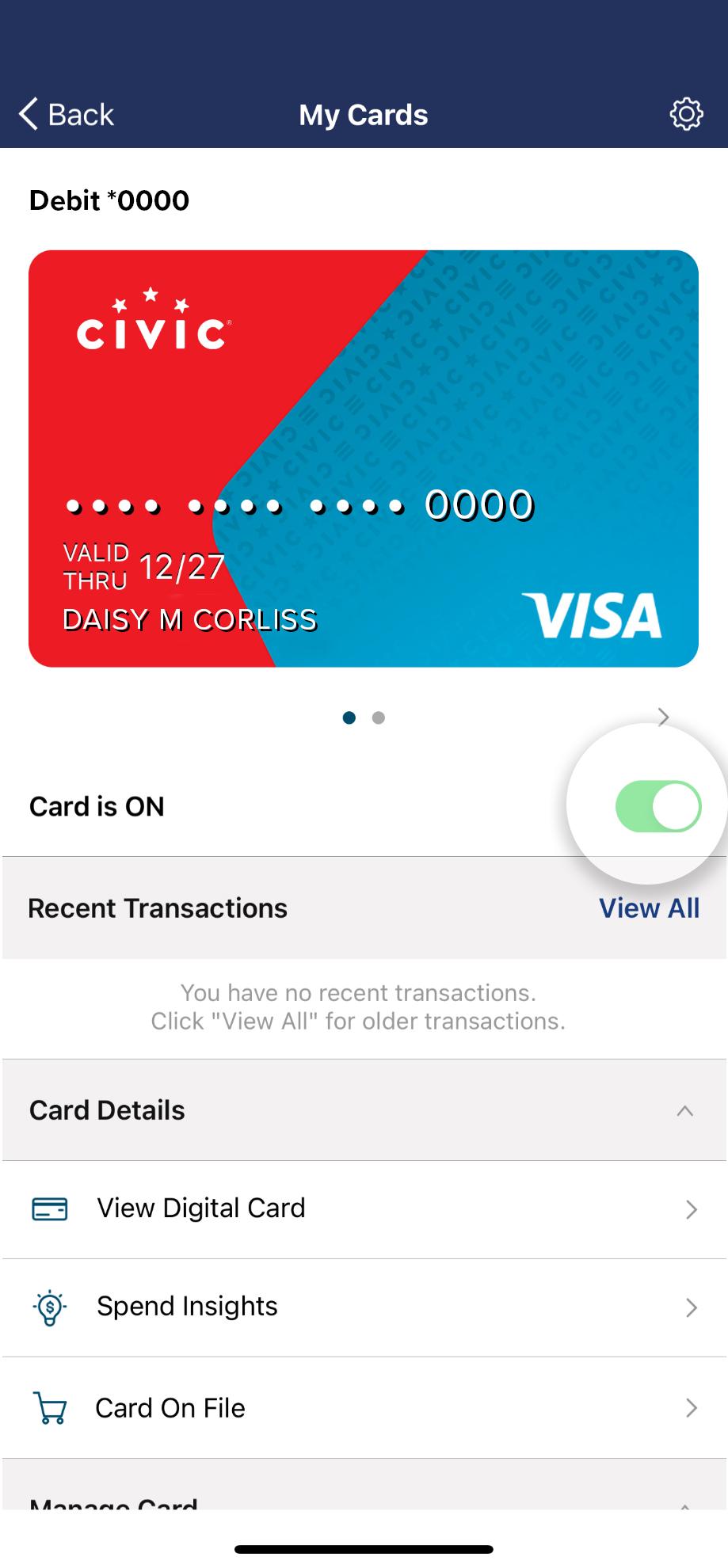
4. Enter Card Control+
Make sure the card displayed is the card you’re intending to disable. If it isn’t, scroll through the cards in your wallet here to find the right one. You’ll notice that just below the image of your card, you have a toggle button to turn your card off or on. To lock your card, all you need to do is tap that button.
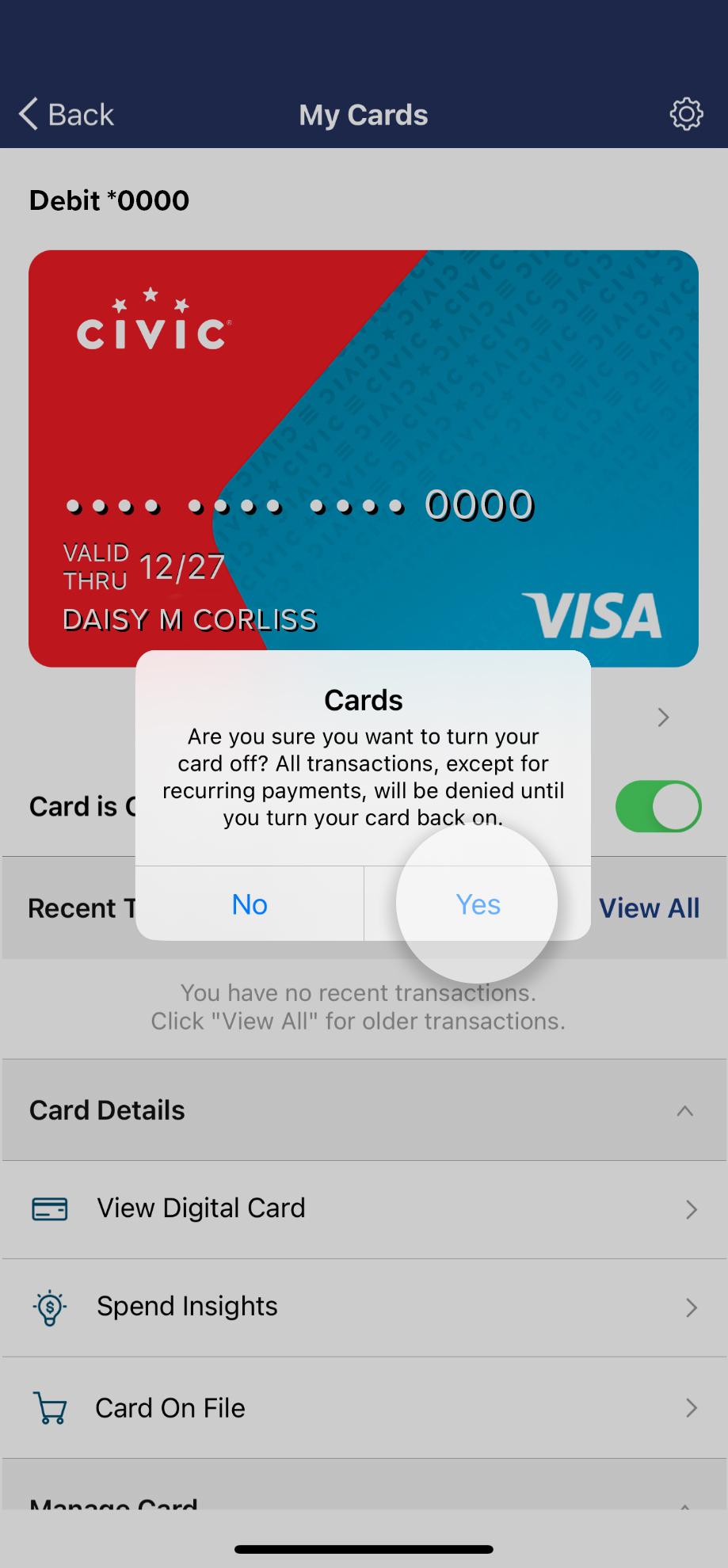
5. Confirm
Select “Yes” if you’re ready to temporarily turn off your card.
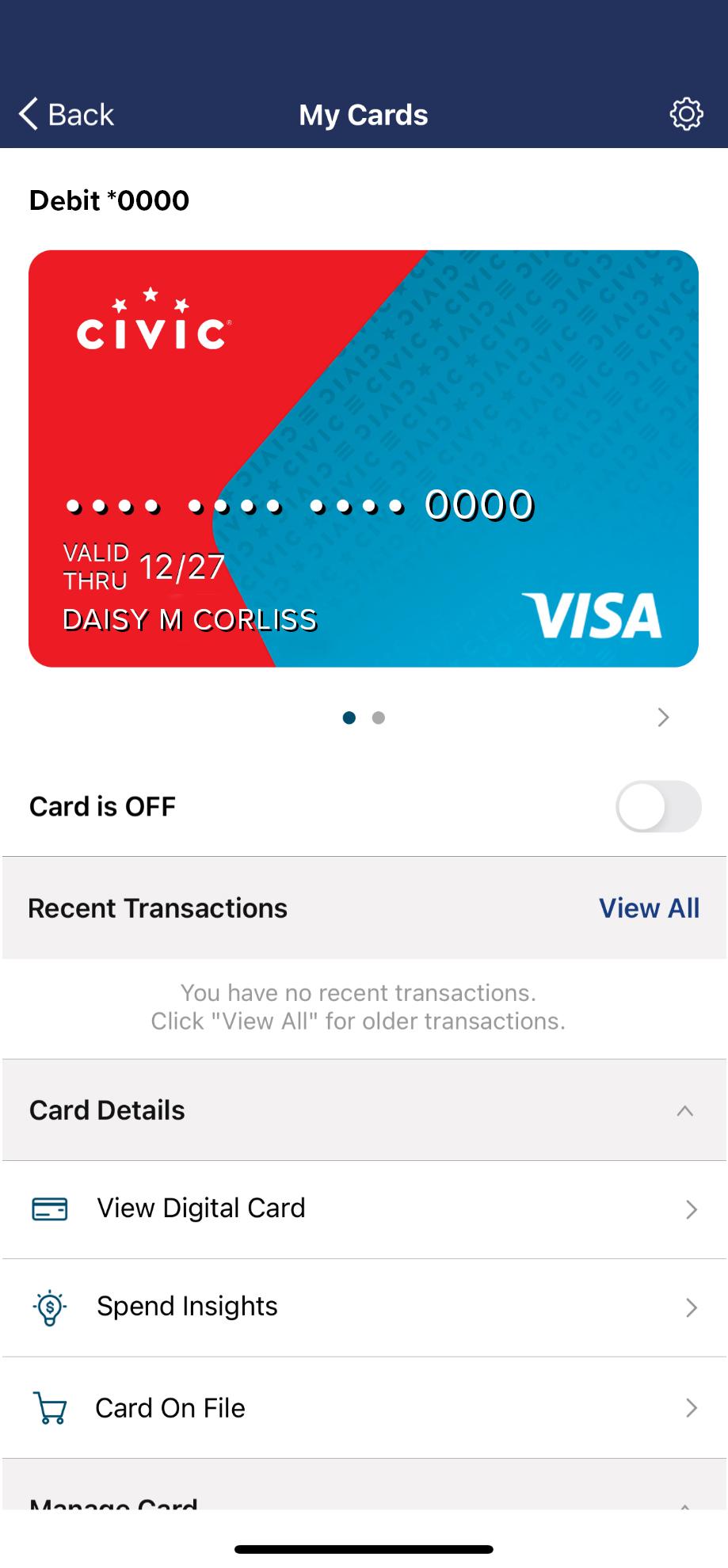
6. Card is off
Notice the toggle beneath your card has been moved to the Off position, and is no longer green. This indicates you have successfully disabled your card.
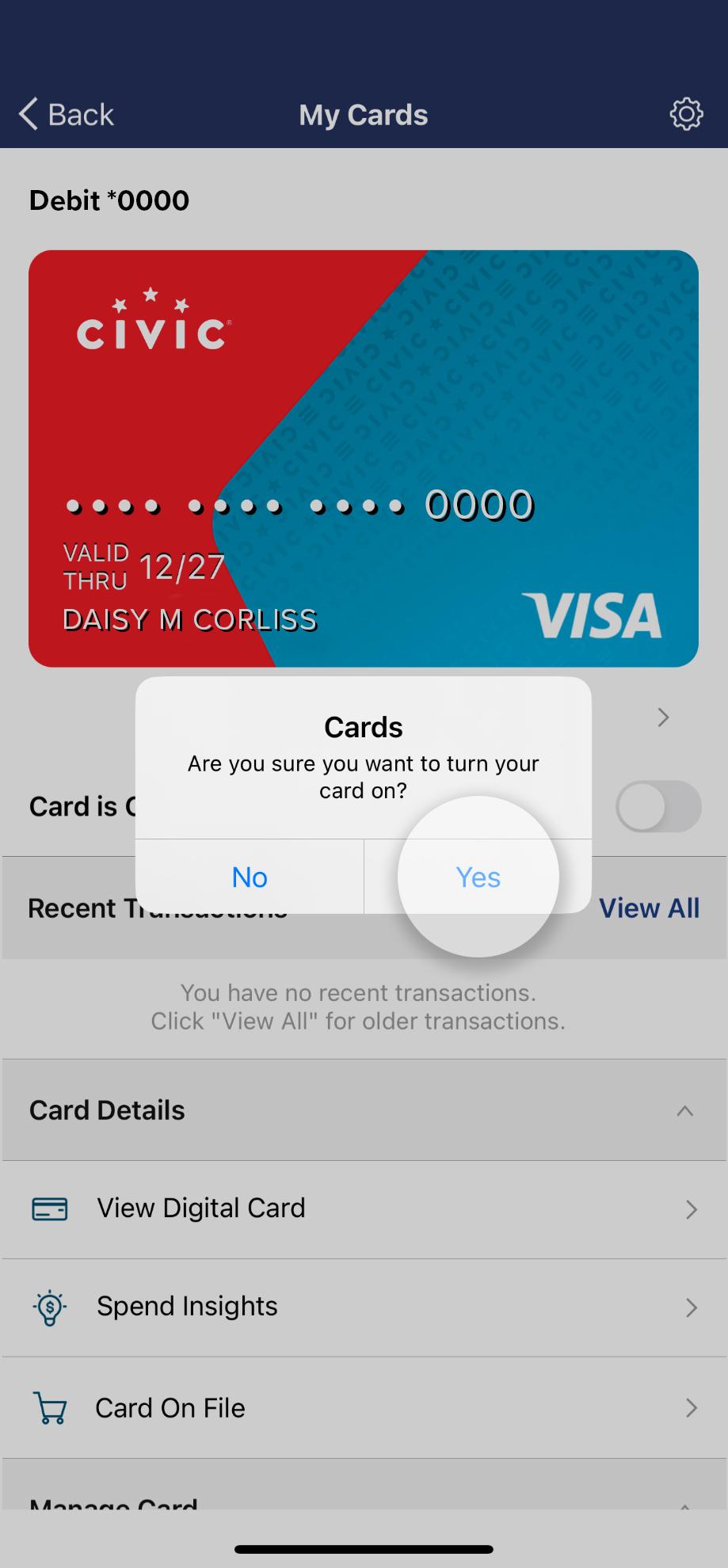
7. To turn your card back on
Slide the toggle back over when you’re ready for your card to become active again. Confirm by selecting Yes, and you’re back in business!
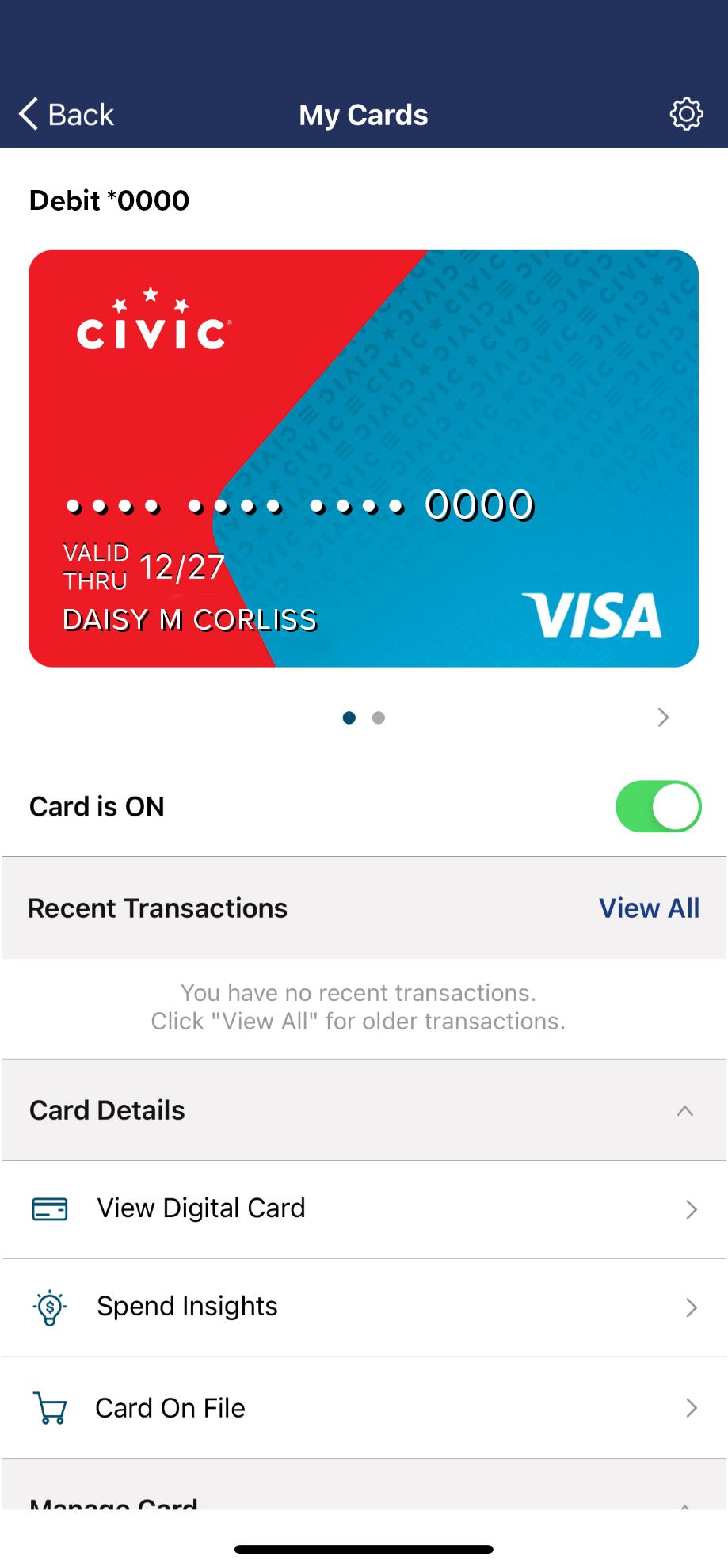
8. Card is back on
Your card has now been turned back on and is ready to use.
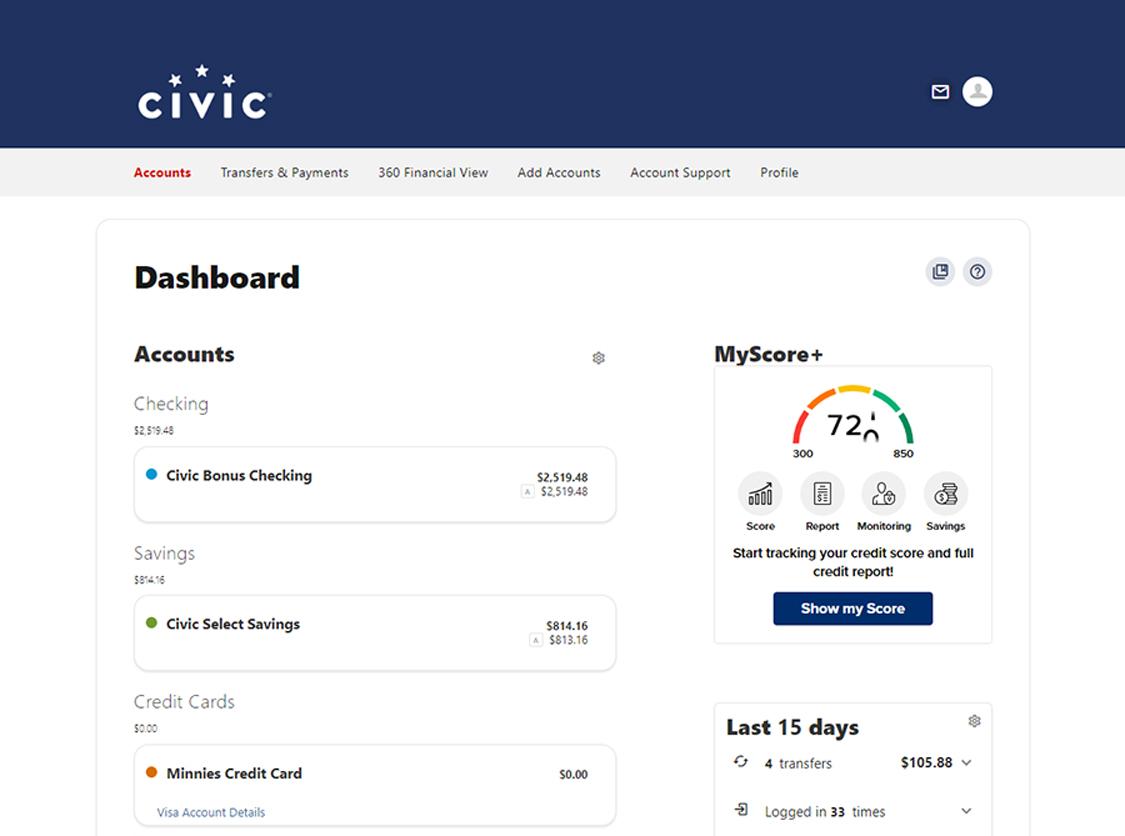
1. Log into Civic online banking
Once you log in, you will see your accounts dashboard. This screen displays all your Civic accounts and cards, and any external or aggregated accounts you may have set up.
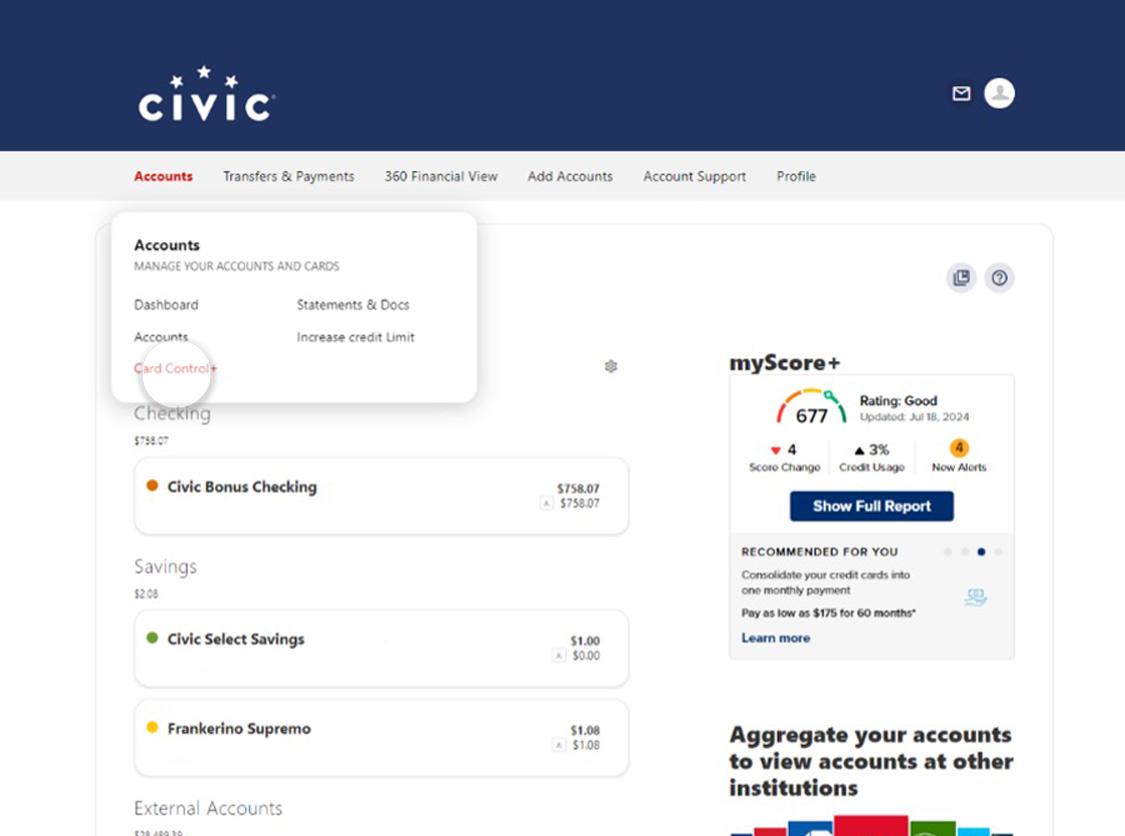
2. Locate Card Control+
Under Accounts in the menu bar at the top of the page, select Card Control+ in the drop-down menu.
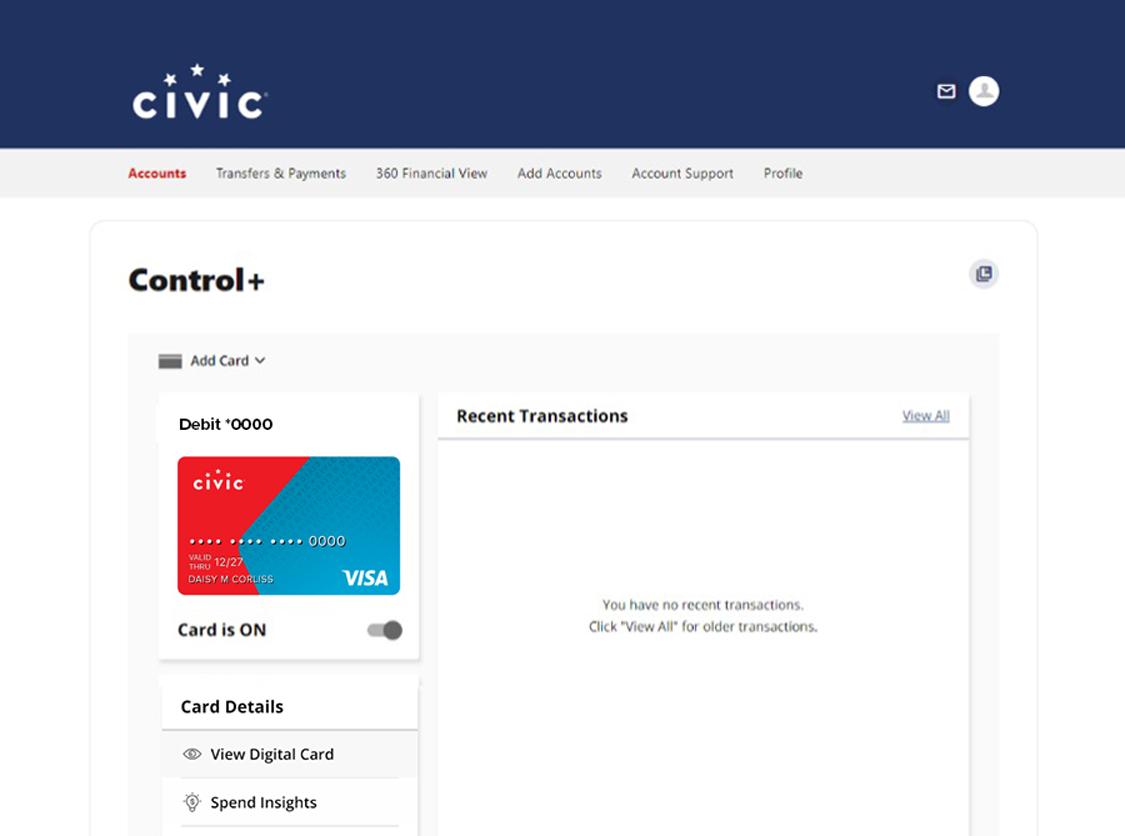
3. Enter Card Control+
When Card Control+ opens, make sure the card being displayed is the card you intend to disable. If not, scroll through the cards in your wallet here to find the right one. You’ll find a toggle button just below the image of your card, to turn your card off or on. To lock your card, just slide that button.
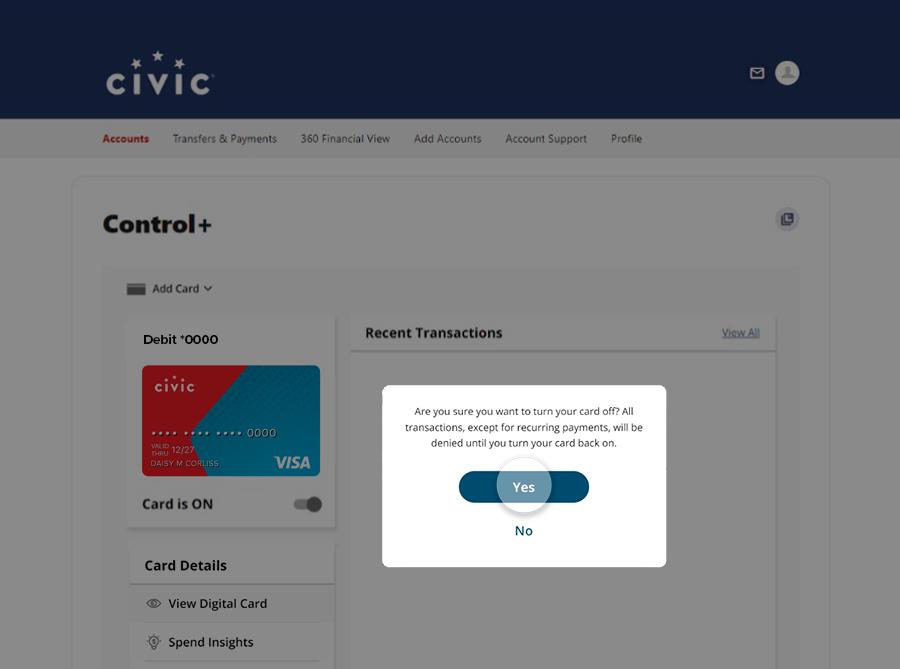
4. Confirm your choice
Select Yes if you’re ready to temporarily turn off your card.
5. Confirm your card is off
The toggle button beneath your card will now be in the Off position, and is no longer green. This indicates you have successfully disabled your card.
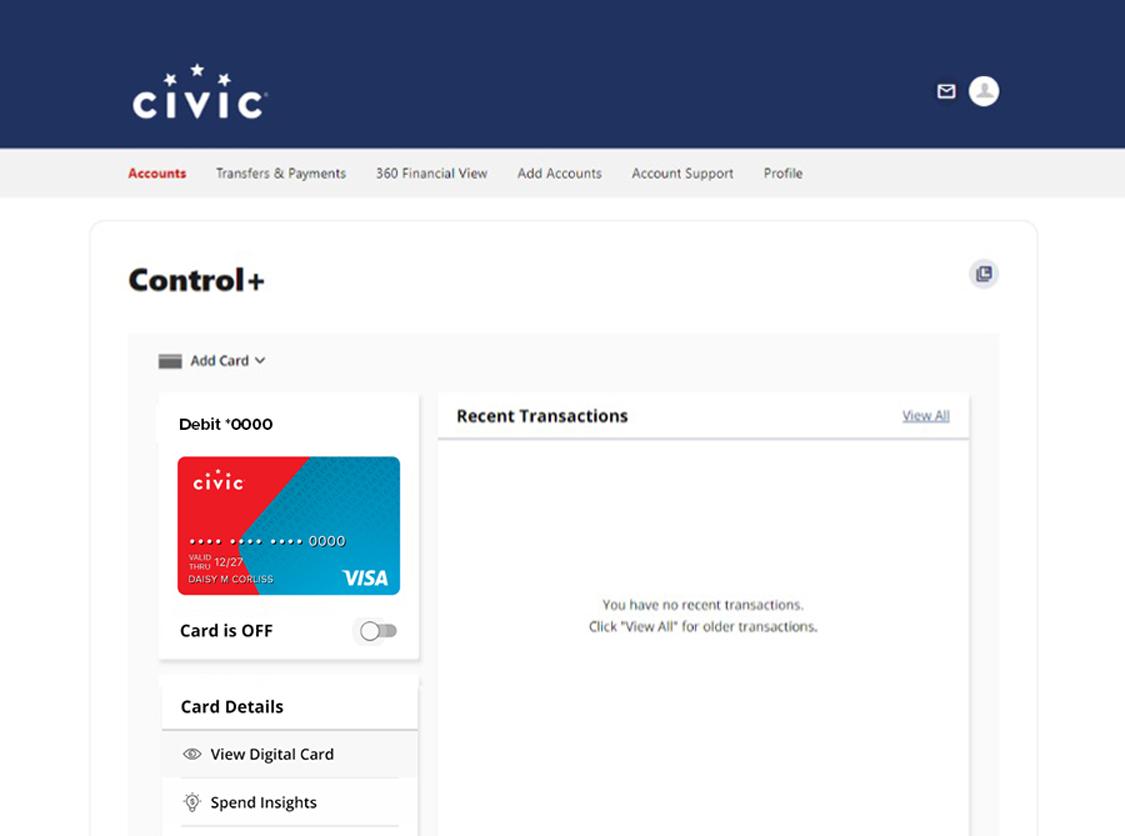
6. To turn your card back on
When you’re ready for your card to be active again, slide the toggle button back over. Confirm by clicking Yes.
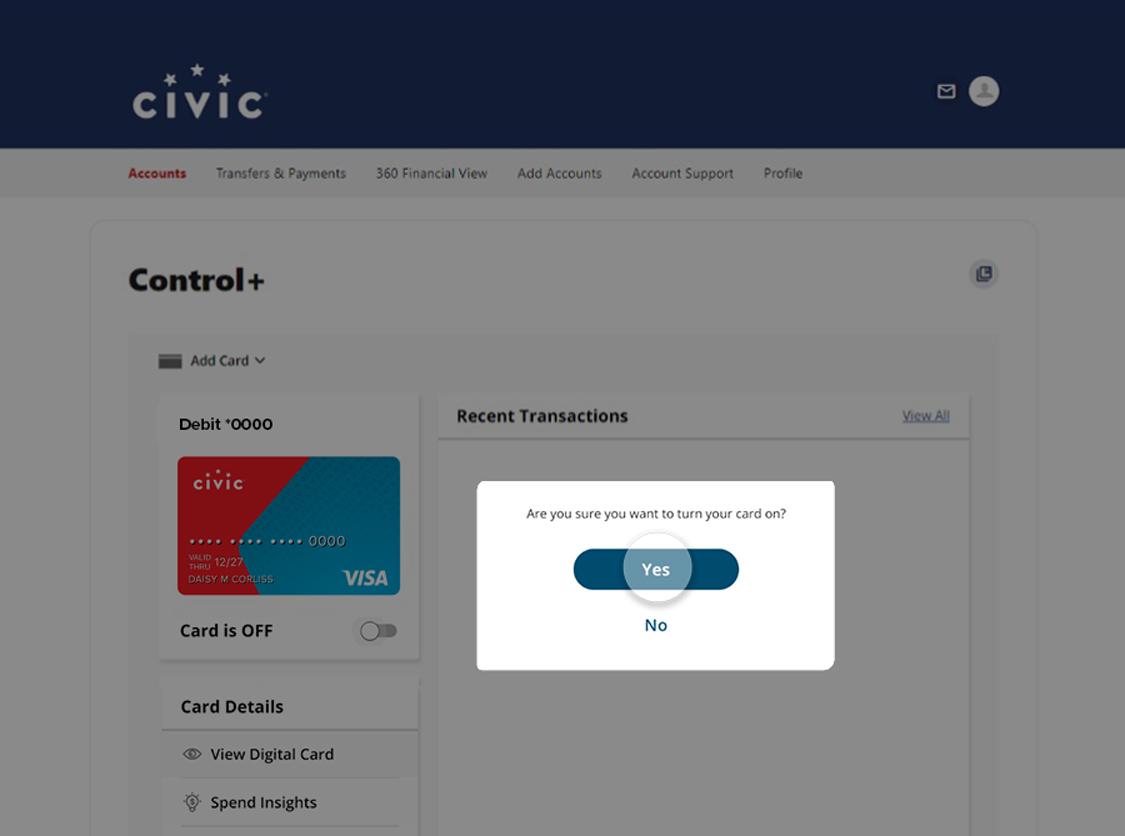
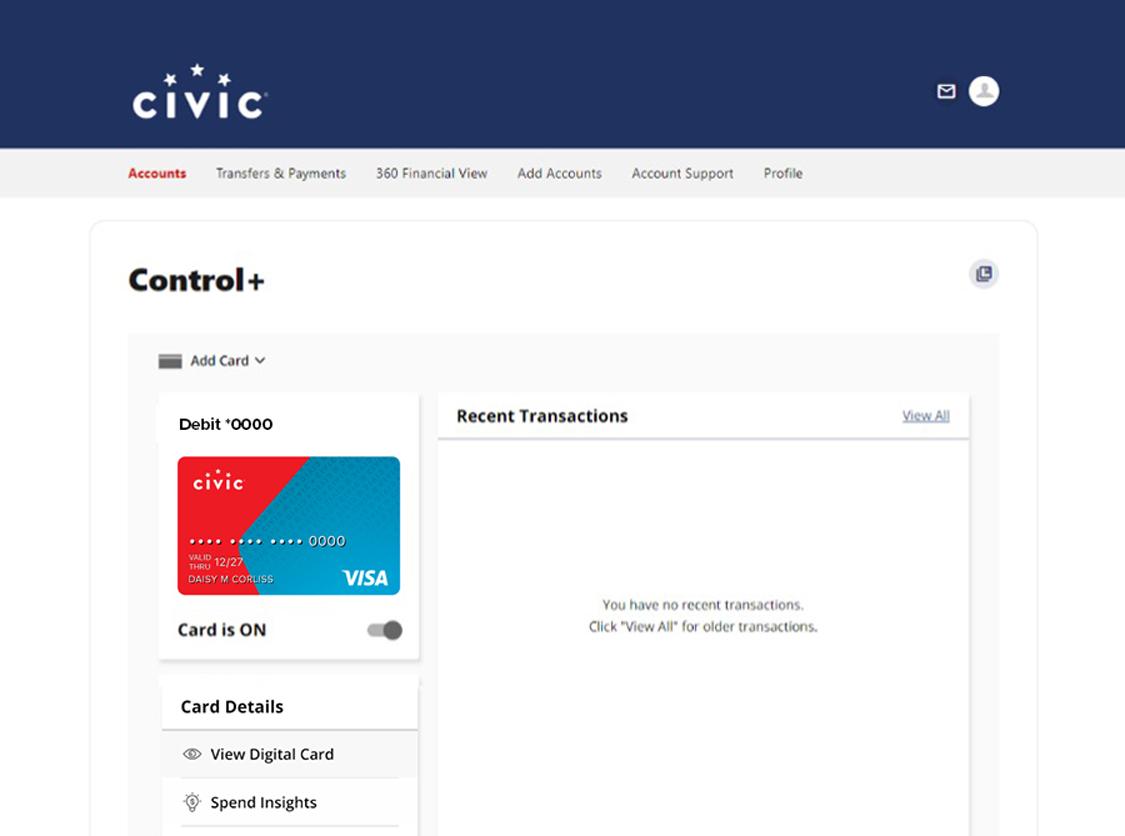
7. Card is now back on
Your card has now been turned back on and is ready to use.


Common fraud example
The practice of trying to scam someone by text is called “smishing.” This is a scam intended to steal your data by convincing you to click a suspicious link, download malware, or respond with sensitive information.
The biggest give away in this example is that Civic won’t text you about suspended accounts. But look closer: The URL – or actual link shown – isn’t even a Civic link.
Sometimes there are other details (misspellings, wrong details, content that seems “off”) that can give away the fraudulent nature of a smishing attempt.
If you’re not sure about the authenticity of a text, you can delete it and block the sender. Prefer to confirm the text wasn't from Civic? Call us at 844-772-4842.

Guarding your money around the clock
This information on detection, prevention and resolution helps you avoid account fraud and identity theft.

Protect yourself online
We work hard to keep you safe when you’re doing business with us. We encourage you to protect your accounts and your identity at all times.

Keeping your data private
At Civic, we are committed to the security of your accounts and data privacy. As part of that effort, you have an important role: knowing the various privacy policies of organizations you do business with, including Civic.

Secure your devices
Security is a team effort that starts with you. Make sure all your devices are access-protected in case they fall into the wrong hands.

Create a secure password
Your first line of defense is a password. Creating a solid password is the most important security control available to you.

My husband got an alert on his phone, and it caught his attention because he did not try to make the transaction … (Civic) stopped the transaction, they froze his card and were able to send him a new card.
Pam Day
Civic member
Steer clear of fraud
Keep your accounts safe with these resources


Fraud frequently asked questions
What’s the best way to avoid becoming a victim of a “smishing” attack?
Be skeptical! Don't respond to “urgent” and unverified text requests for personal information. Take a moment to ask yourself if 1) you know the sender; 2) the request makes sense; 3) the link is correct or can be verified without clicking.
What should I do if I click on the link and then realize it’s a “smishing” attack?
Contact Civic immediately at 844-772-4842.
What’s two-factor authentication? Why should I use it?
Two-factor authentication (also known as “multifactor authentication”) helps protect your identity and your accounts. It’s an added layer of security for online accounts that requires two different methods to verify your identity when logging in, using a combination of “something you know” (like a password), “something you have” (like a code from an app), and “something you are” (like facial recognition or a fingerprint). This makes it much harder for hackers to access your accounts.
What you can expect from us
- Civic will require that you create a unique user ID and a password that uses a combination of letters and numbers, to log into your accounts
- We may ask you for other information that helps us verify your identity, such as
- Your address and phone number
- The last four of your social security number
- The answers you provided to security questions when you became a member
- Financial products you may have with us
- A code sent to your smartphone to verify you have your phone
We will offer you the opportunity to call us back to verify the legitimacy of our call
We will never ask you for your
- Username
- Password
- PIN
- Full social security number
Our trusted service providers
You may receive communication from these providers. They are legitimate, but always err on the side of caution. If you feel like the communication is not legitimate, please send us a secure message. Visit our guides page to learn how to send a secure message.

Ascensus works with us to help manage member IRAs and HSAs

Credit Union Mortgage Association (CUMA) oversees the administration of our mortgage products

Fiserv provides support for our card systems

Savvymoney delivers our member credit scoring platform

United Solutions Company helps us with debt recovery
Check out these how-to lessons
Check out these how-to lessons


Our Chief Technology Officer Sandy Steward introduces our voice banking tool and explains how voice biometrics add an extra layer of personalized security to keep your money safe no matter where you are when you bank. Check it out in the first episode of our security series.
Recommended Articles
The ultimate resource for your banking needs.

Fraud & Security
Jury duty scams and what ‘deputies’ will never do

Fraud & Security
Job recruiter or employment scam?


Money Mentor
How to avoid overdrawn fees